In 2026, the landscape of AI model deployment platforms is more advanced—and more essential—than ever. As organizations race to integrate AI into production, the question of how to deploy models efficiently, securely, and at scale looms large. Two paradigms dominate the conversation: Kubernetes-based orchestrations and serverless AI deployment platforms. This ai model deployment platforms comparison will break down the strengths and tradeoffs of each, with evidence-driven guidance to help you choose the right fit for your use case.
Introduction to AI Model Deployment
Modern AI isn’t just about building smarter models—it’s about reliably running those models in production. The transition from a successful experiment in a Jupyter notebook to a robust, scalable deployment is a journey filled with infrastructure, orchestration, and operational challenges. As highlighted by the analysis on Moondive.co, “the days of stitching together a bunch of custom scripts are mostly behind us for anything serious.” Today, businesses rely on dedicated AI deployment platforms that abstract or automate much of this complexity.
Two broad strategies dominate:
- Kubernetes-based deployments: Leverage open-source container orchestration for maximum control and flexibility.
- Serverless AI platforms: Offer managed, auto-scaling endpoints for inference without server management.
Let’s examine each approach, their leading implementations, and what the research says about their real-world use.
Overview of Kubernetes for AI Deployment
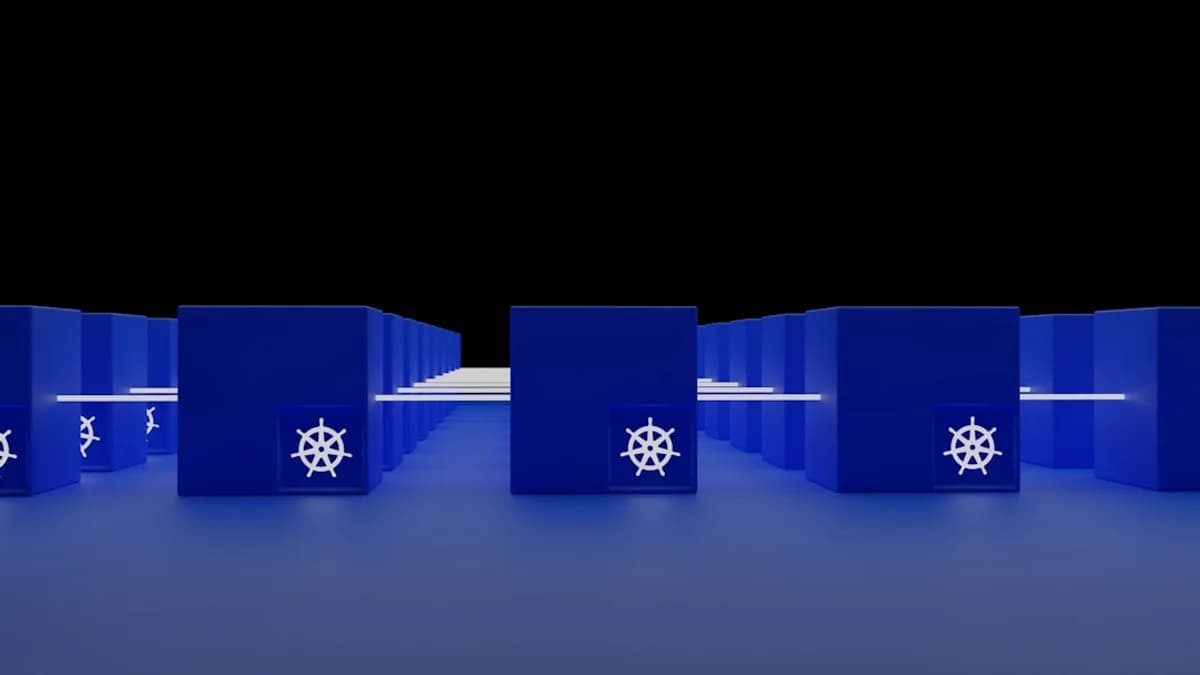
Kubernetes has become the backbone of container orchestration for cloud-native applications, including AI workloads. Its flexibility and ecosystem make it a common choice for organizations that want deep control over their deployments.
Key features for AI deployment (as per Moondive.co and DigitalOcean):
- Granular resource management: Allocate GPUs, CPUs, and memory precisely.
- Custom orchestration: Build complex workflows, including distributed training and multi-step pipelines.
- Vendor-agnostic: Can run on any major cloud or on-premises.
- Integration power: Seamlessly integrates with storage, CI/CD, and monitoring stacks.
Enterprise case study: At ‘Nexus Innovations,’ a fintech company deployed fraud detection using AWS SageMaker (which, under the hood, leverages Kubernetes for many orchestration tasks), highlighting the platform's flexibility in managing custom feature engineering and real-time inference.
“SageMaker gives you ‘all the levers’—which is great if you know which ones to pull, but confusing if you don’t.” (Moondive.co)
Typical Kubernetes-based AI deployment stack:
| Layer | Example Tools/Platforms |
|---|---|
| Orchestration | Kubernetes, AWS EKS, Google GKE, Azure AKS |
| Model Serving | Seldon Core, KFServing, custom Docker images |
| Monitoring | Prometheus, Grafana, OpenTelemetry |
| CI/CD | Jenkins, GitHub Actions, ArgoCD |
Kubernetes is especially favored by teams with DevOps experience and those needing fine-grained customization.
Serverless Platforms Explained
Serverless AI deployment platforms abstract away infrastructure, letting you deploy models as managed endpoints with auto-scaling, monitoring, and security handled by the provider. Leading examples include AWS SageMaker Endpoints, Azure Machine Learning, and Google Cloud Vertex AI.
As summarized in Moondive.co and DigitalOcean:
- No server management: Focus on your model; the platform handles scaling and orchestration.
- On-demand resources: Only pay for execution time, not idle capacity.
- Rapid deployment: Move from model to endpoint in minutes.
- Integrated features: Built-in monitoring, logging, security, and sometimes auto-retraining.
Enterprise trends: According to DigitalOcean’s 2026 survey, 46% of organizations are deploying AI agents using managed, on-demand AI infrastructure, rather than maintaining their own clusters.
Popular managed serverless AI platforms:
| Platform | Notable Features |
|---|---|
| AWS SageMaker | Deep AWS integration, flexible endpoints, JumpStart models |
| Azure ML | Visual designer, strong MLOps, enterprise security |
| Google Vertex AI | Unified lifecycle, TPUs, TensorFlow-native, auto-scaling |
| DigitalOcean AI | On-demand GPU clusters, simple pricing, developer-friendly |
| DeepAI | API-based deployment, radical accessibility, $9.99/mo Pro tier |
Serverless platforms are especially attractive for rapid prototyping, cost-effective scaling, and teams looking to minimize infrastructure overhead.
Scalability and Performance Comparison
Scalability and performance are two of the most critical criteria in any ai model deployment platforms comparison.
Kubernetes: Maximum Flexibility
- Custom scaling: You define exactly how pods scale, how resources are allocated (including GPU scheduling), and can optimize for low latency or throughput.
- Advanced orchestration: Supports distributed inference, multi-step pipelines, and batch processing.
- Hardware access: Integrates with specialized hardware (GPUs, TPUs).
- Vendor-neutral: Scale across clouds or on-premises.
“If you need a huge amount of granular control and flexibility, and you’ve got the engineers to manage it, Kubernetes-based tools like SageMaker are fantastic.” (Moondive.co)
Serverless: Effortless Auto-Scaling
- Automatic scaling: Endpoints scale up/down based on demand, with no manual intervention.
- Performance tuning: Platforms like Google Vertex AI provide specialized hardware options (e.g., TPUs) for high-performance inference.
- Rapid elasticity: Perfect for unpredictable or spiky workloads.
Real-world example: DeepAI’s scalable APIs support billions of requests with dynamic scaling, while Google Vertex AI is praised for “insane” scalability on massive workloads, particularly with TensorFlow and computer vision.
Comparison Table: Scalability and Performance
| Aspect | Kubernetes-Based | Serverless Platforms |
|---|---|---|
| Manual Scaling | Yes | No (auto) |
| Auto-Scaling | With custom configs | Native, out of the box |
| Hardware Customization | Full (GPUs, TPUs, etc.) | Limited to provider offerings |
| Peak Performance | Maximum (with tuning) | High, but less tunable |
| Best Fit | Custom, large, stable workloads | Variable, bursty, prototyping |
Cost Implications of Each Deployment Method
Cost is often the decisive factor in platform selection. Pricing structures are complex and vary by provider, but the sources provide key insights.
Kubernetes: Pay for What You Provision
- Resource-based: Pay for the compute, storage, and networking you allocate—even if underused.
- Engineering cost: Requires DevOps expertise, which can increase operational expenses.
- Potential for waste: Over-provisioning leads to idle costs.
Serverless: Pay for What You Use
- Usage-based: Billed for actual inference time, not idle capacity.
- Transparent pricing: Platforms like DeepAI charge $9.99/month for high-volume usage and private generations.
- Cost efficiency: Ideal for unpredictable workloads, experiments, or when traffic varies.
“Survey costs were reduced by 60-80% compared to manual methods” when using automated, serverless AI systems for environmental analysis (DeepAI).
Cost Comparison Table
| Aspect | Kubernetes-Based | Serverless Platforms |
|---|---|---|
| Billing Model | Provisioned resources | Per-inference/pay-as-you-go |
| Idle Cost | Yes | No |
| Engineering Overhead | High | Low |
| Predictability | Variable (depends on tuning) | High (usage-based) |
| Entry-Level Pricing | Not specified | DeepAI Pro: $9.99/month |
Note: For AWS, Azure, and Google Cloud, detailed per-inference pricing is not given in sources, but serverless is consistently cited as more cost-effective for bursty or variable workloads.
Developer Experience and Learning Curve
The developer experience can make or break adoption, especially as teams ramp up AI deployment.
Kubernetes: Power with Complexity
- Steep learning curve: “It can feel like drinking from a firehose.”
- DIY workflows: Full control, but requires deep understanding of Kubernetes and infrastructure-as-code.
- Best for: Teams with DevOps/SRE resources and existing Kubernetes expertise.
Serverless: Rapid and Accessible
- Streamlined onboarding: “Move from model to endpoint in minutes.”
- Integrated tooling: Platforms often provide visual designers, pre-built pipelines, and APIs.
- Wide accessibility: DeepAI’s platform, for example, is usable “without creating an account” for basic features.
Developer Experience Table
| Aspect | Kubernetes-Based | Serverless Platforms |
|---|---|---|
| Learning Curve | Steep | Shallow |
| Setup Time | Hours/days | Minutes |
| Pre-built Integrations | Limited | Extensive |
| Audience | DevOps/Engineers | Data scientists, developers, hobbyists |
Security and Compliance Considerations
When deploying AI in production, especially in regulated industries, security and compliance are paramount.
Kubernetes: Customizable Security
- Customizable policies: Full control over network, secrets, and access management.
- Integration with enterprise security: Can be tailored for specific compliance regimes.
Serverless: Built-In Enterprise Controls
- Enterprise-grade security: Platforms like Azure Machine Learning and AWS SageMaker include strong governance, role-based access, and compliance (e.g., FedRAMP, HIPAA via Azure).
- No customer data training: OpenAI’s ChatGPT Enterprise, for example, states “OpenAI does not train on customer data.”
- Centralized admin: Enterprise editions offer single sign-on, role-based access, and advanced admin tooling.
“Microsoft Copilot...inherently meets many compliance standards (FedRAMP, HIPAA, etc. via Azure) and is governed via existing IT policies.” (IntuitionLabs)
Security Comparison Table
| Aspect | Kubernetes-Based | Serverless Platforms |
|---|---|---|
| Custom Security | Yes (DIY) | Built-in, configurable |
| Compliance Standards | Possible, but custom | Pre-certified (FedRAMP, HIPAA, etc.) |
| Data Privacy | Custom policies | Often default (e.g., no training on customer data) |
| Admin Control | Full, manual | Enterprise dashboards, SSO, RBAC |
Integration with CI/CD Pipelines
Continuous deployment and automation are core to modern AI ops.
Kubernetes
- Flexible integration: Works with Jenkins, ArgoCD, GitHub Actions, and other pipeline tools.
- Custom triggers: Automate retraining, deployment, and rollback workflows.
- Advanced use cases: Supports canary deployments, A/B testing.
Serverless
- Simplified pipelines: Platforms like Azure ML and Vertex AI provide managed CI/CD solutions with visual designers and integrated MLOps.
- Rapid iteration: Easy to update models and endpoints without redeploying infrastructure.
Pipeline Integration Table
| Aspect | Kubernetes-Based | Serverless Platforms |
|---|---|---|
| CI/CD Integration | Advanced, flexible | Built-in, user-friendly |
| Rollback/Versioning | Manual or scripted | Managed, often automatic |
| Monitoring & Alerts | Custom stack | Built-in dashboards |
Case Studies: Real-World Deployment Scenarios
The best way to understand the tradeoffs is through real-world examples.
1. AWS SageMaker (Kubernetes-Backed)
Scenario: Fraud detection system for a fintech company (Nexus Innovations).
- Context: Entire infrastructure on AWS.
- Approach: Used SageMaker Processing for feature engineering, training jobs, and managed endpoints for real-time inference.
- Result: Seamless integration with existing AWS tools, full control over pipeline—at the cost of some onboarding complexity.
2. DeepAI (Serverless API Platform)
Scenario: Conservation and environmental monitoring projects.
- Context: Deployed computer vision pipelines for real-time species detection, habitat mapping, and nationwide surveys.
- Approach: Used DeepAI’s APIs for rapid inference and automated analysis pipelines.
- Result: “Survey costs reduced by 60-80%,” accelerated project timelines, and enabled non-technical users to access AI capabilities.
3. Google Vertex AI (Serverless, Cloud-Native)
Scenario: Large-scale computer vision and research workloads.
- Context: Teams needing TensorFlow/TPU integration and rapid scaling.
- Approach: Leveraged Vertex AI for unified data labeling, training, deployment, and monitoring.
- Result: High developer productivity, “insane” scalability, especially for research-driven teams.
“Vertex AI is their attempt to simplify and bring everything together...surprisingly developer-friendly for custom solutions, and their scalability for really massive workloads...is just insane.” (Moondive.co)
Final Recommendations Based on Use Cases
Based on the ai model deployment platforms comparison across scalability, cost, developer experience, and security, here’s when to choose which path:
Choose Kubernetes-Based Deployment If:
- You need maximum control and flexibility over infrastructure.
- Your workloads require custom hardware allocation (e.g., multi-GPU, on-premise).
- You have a DevOps-savvy team and existing Kubernetes investment.
- You must integrate with complex, custom CI/CD workflows.
Choose Serverless AI Platforms If:
- You want to minimize infrastructure management and focus on the model/application.
- Your workloads are variable, bursty, or experimental.
- You require rapid deployment, scaling, and integrated monitoring.
- You operate in a regulated environment and need built-in compliance and admin tools.
- Your team includes data scientists or business users who value ease of use and visual tooling.
Platform Selection Table
| Use Case | Best Fit Platform |
|---|---|
| Deep AWS integration | AWS SageMaker |
| Enterprise governance, MLOps | Azure Machine Learning |
| Research, TensorFlow, scaling | Google Vertex AI |
| Rapid prototyping, cost efficiency | DeepAI, DigitalOcean AI |
| Custom hardware, on-prem | Kubernetes-based stack |
FAQ: AI Model Deployment Platforms Comparison
Q1: What are the main differences between Kubernetes and serverless AI deployment platforms?
- Kubernetes offers maximum customization and control, but requires DevOps expertise. Serverless platforms abstract infrastructure, enabling rapid, scalable deployments with minimal setup.
Q2: Which platforms are best for enterprise security and compliance?
- Azure Machine Learning and AWS SageMaker offer robust enterprise controls, including role-based access and compliance with standards like FedRAMP and HIPAA. Serverless platforms often have built-in admin dashboards and privacy guarantees.
Q3: How do costs compare between Kubernetes and serverless?
- Kubernetes incurs costs for provisioned resources, regardless of usage, plus engineering overhead. Serverless models charge for actual inference time or usage, making them more cost-effective for spiky or unpredictable workloads.
Q4: What is the developer experience like on each platform?
- Kubernetes has a steep learning curve and is best for engineers with infrastructure knowledge. Serverless platforms (e.g., DeepAI, Azure ML) offer quick onboarding, visual designers, and are accessible to a broader range of users.
Q5: Can these platforms integrate with CI/CD pipelines?
- Yes. Kubernetes supports advanced, customizable CI/CD through tools like Jenkins and ArgoCD. Serverless platforms often include managed CI/CD and versioning, simplifying the process.
Q6: Are there real-world examples of each approach in action?
- Yes. Financial fraud detection (SageMaker/Kubernetes), conservation analytics (DeepAI/serverless), and large-scale research workloads (Vertex AI/serverless) all demonstrate the strengths of their respective platforms.
Bottom Line
The best AI model deployment platform depends on your team’s expertise, workload characteristics, and business demands. Kubernetes-based deployments offer unmatched flexibility for those who need it and can manage the complexity. Serverless platforms—led by AWS SageMaker, Azure ML, Google Vertex AI, DeepAI, and DigitalOcean AI—deliver speed, scalability, and simplicity, especially for teams prioritizing rapid iteration and minimal infrastructure burden.
“The best choice really depends on what you’re trying to achieve and what your team’s already used to.” (Moondive.co)
As the AI deployment space matures in 2026, organizations are trending toward managed, serverless platforms for new projects—unless custom needs or legacy investments dictate otherwise. Evaluate your requirements carefully, leverage the platform that aligns with your needs, and stay tuned as this space continues to evolve.