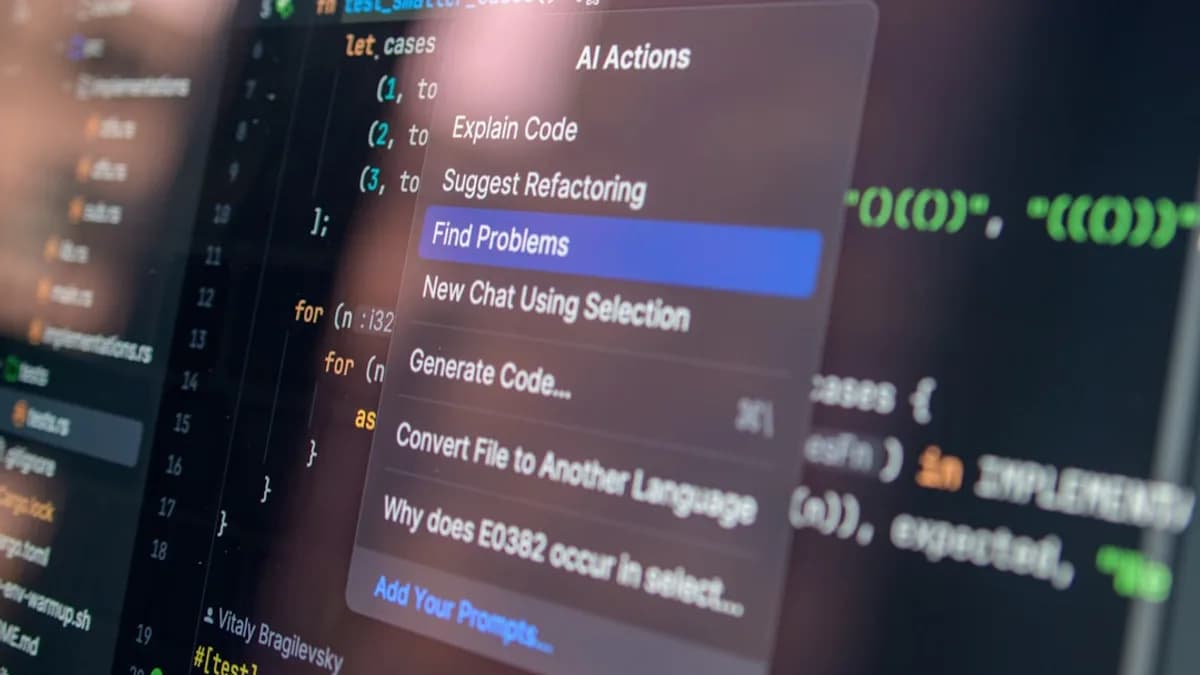
As enterprise development teams continue to scale, the complexity and volume of code have reached unprecedented levels. Manual code review—once the gold standard of quality assurance—has become a bottleneck in modern CI/CD pipelines. That’s where AI code review tools for enterprise teams come in: leveraging machine learning and automation to improve code quality, security, and developer productivity. In this analysis, we break down the top AI-powered code review platforms tailored for enterprise development, focusing on the criteria that matter most—accuracy, integration, and return on investment (ROI).
The Need for AI in Code Review
Enterprise software development now operates at a velocity and scale that makes traditional, manual code reviews both risky and inefficient. According to the DORA 2025 Report cited by Second Talent, high-performing teams using AI code review tools saw a 42-48% improvement in bug detection accuracy. The code review automation market itself ballooned from $550 million to $4 billion by 2025, reflecting how essential these tools have become for large organizations.
“AI code review tools provide consistent, thorough analysis on every pull request without reviewer fatigue or scheduling conflicts.”
— Second Talent, 2026
AI code review tools use techniques like static analysis, natural language processing, and machine learning to:
- Catch security vulnerabilities and bugs earlier
- Enforce coding standards at scale
- Reduce review time from hours to minutes
- Provide scalable expertise across distributed teams
For enterprise teams, these benefits translate directly to reduced risk, accelerated delivery, and improved ROI.
Key Features to Evaluate in AI Code Review Tools
When evaluating AI code review tools for enterprise teams, focus on features that deliver tangible value:
- Accuracy: How reliably does the tool detect real bugs and vulnerabilities without overwhelming developers with false positives?
- Integration: Does it integrate seamlessly with your source control (e.g., GitHub, GitLab, Bitbucket) and CI/CD pipeline?
- Language Support: Can it review all the languages your team uses? Some tools support 40+ languages, while others specialize.
- Security Scanning: Does it offer static application security testing (SAST) or vulnerability detection?
- Customization: Can you define custom rules or quality gates to match enterprise policies?
- Scalability: Is it designed for large codebases and distributed teams?
- Reporting & Compliance: Are there enterprise-grade auditing, reporting, and compliance features?
- Pricing & Licensing: Are there enterprise licensing options, SSO, and dedicated support?
These criteria will help you match the right tool to your organization’s needs.
DeepCode vs. Codacy vs. CodeGuru: Feature Breakdown
Among the most widely adopted AI code review tools for enterprises are DeepCode, Codacy, and Amazon CodeGuru. Here’s how they compare based on real 2026 research data:
| Feature | DeepCode | Codacy | Amazon CodeGuru |
|---|---|---|---|
| Best For | Advanced static analysis | Automated quality gates, compliance | AWS-integrated review |
| Language Support | 40+ | 49+ | Java, Python |
| Integration | GitHub, GitLab, Bitbucket | GitHub, GitLab, Bitbucket | AWS, GitHub, Bitbucket |
| Security Scanning | Yes (multi-layered) | Yes | Yes |
| Custom Rules | Yes | Yes | No |
| Reporting | Structured, PR-based | Policy-driven, audit-friendly | Reports in AWS Console |
| Offline/On-prem Options | Limited | Cloud & self-hosted | AWS Cloud |
| Pricing | Free/public, Pro: $15/user | Free/public, Pro: $15/user, Custom | Pay-per-line, AWS billing |
DeepCode
- Strengths: Multi-layered analysis (AST, SAST, AI feedback), line-by-line PR comments, custom rule config, supports all major VCS platforms.
- Weaknesses: Can be noisy on large PRs, some learning curve, limited offline options.
Codacy
- Strengths: Broadest language support (49+), automated quality gates, policy-driven reporting, self-hosted deployment for compliance.
- Weaknesses: Paid tiers required for advanced features, large codebase analysis can be resource-intensive.
Amazon CodeGuru
- Strengths: Deep AWS integration, focused Java/Python support, real-time security/performance insights.
- Weaknesses: Limited to AWS ecosystem, pay-per-line pricing may not scale predictably.
“CodeRabbit has quickly become a favorite among teams using GitHub, generating structured feedback on pull requests covering readability, maintainability, security, and potential bugs.”
— Second Talent, 2026
Integration with Popular CI/CD Pipelines
Enterprise teams require AI code review tools to fit directly into existing DevOps workflows. Seamless integration with CI/CD pipelines and version control is non-negotiable.
| Tool | CI/CD & VCS Integration | IDE Integration |
|---|---|---|
| DeepCode | GitHub, GitLab, Bitbucket | VS Code, JetBrains |
| Codacy | GitHub, GitLab, Bitbucket | VS Code, JetBrains |
| CodeGuru | AWS CodePipeline, GitHub, Bitbucket | AWS IDE Tools |
| SonarQube | All major platforms, Jenkins, Azure DevOps, Bamboo | N/A (focus on server) |
| Qodo | VS Code, JetBrains, CI tools | VS Code, JetBrains |
Highlights:
- Codacy and DeepCode both offer out-of-the-box integration with the most widely used code hosting platforms: GitHub, GitLab, and Bitbucket.
- Amazon CodeGuru is uniquely tailored for teams already invested in the AWS ecosystem, integrating with AWS CodePipeline and providing feedback within the AWS Console.
- SonarQube stands out for supporting more traditional CI tools (Jenkins, Azure DevOps), making it suitable for hybrid enterprise environments.
- IDE plugins (VS Code, JetBrains) are available for tools like Codacy and Qodo, supporting developer-in-the-loop workflows.
“AI-powered code review software addresses this challenge by embedding automated quality and security checks directly into developer workflows.”
— ET CIO, 2026
Accuracy and False Positive Rates Analysis
The true value of any AI code review tool for enterprise teams lies in its ability to accurately flag real issues while minimizing noise.
- CodeRabbit achieves 46% accuracy in detecting real-world runtime bugs through a combination of Abstract Syntax Tree (AST) analysis, static application security testing (SAST), and generative AI feedback (Second Talent, 2026).
- Teams using AI code review report a 42-48% improvement in bug detection accuracy compared to manual review alone (DORA 2025 Report via Second Talent).
- False positives remain a concern, especially on large pull requests. CodeRabbit, for example, can be “noisy on large PRs” and exhibits “occasional false positives,” highlighting the need for careful configuration and tuning.
| Tool | Bug Detection Accuracy | False Positive Comments | Notes |
|---|---|---|---|
| CodeRabbit | 46% (runtime bug detection) | Occasional, especially large PRs | Multi-layered analysis |
| Codacy | Not specified, but strong | Not detailed | Relies on static & AI hybrid analysis |
| CodeGuru | Not specified | Not detailed | Focused Java/Python codebases |
“The best AI developer tools now include code review as a core capability, making quality assurance accessible to teams of all sizes.”
— Second Talent, 2026
Impact on Developer Productivity and Code Quality
The adoption of AI code review tools for enterprise teams has a measurable impact on both developer productivity and code quality:
- Review time reduction: Teams using AI tools reduce time spent on code reviews by 40-60% (Qodo Research via Second Talent).
- Defect detection: Higher accuracy rates in bug and vulnerability detection mean issues are caught earlier, reducing downstream costs.
- Standardization: AI reviews provide consistent enforcement of coding standards, reducing variance between human reviewers.
- Developer onboarding: Tools like CodeRabbit and Codacy provide structured, actionable feedback, accelerating onboarding for new team members.
Key Productivity Benefits:
- Faster PR turnaround: Review feedback delivered in minutes.
- Reduced reviewer fatigue: AI handles repetitive checks so senior devs can focus on complex logic and architecture.
- Automated security expertise: Even teams without security specialists can catch vulnerabilities before production.
“AI-powered insights support faster, more reliable code delivery at scale.”
— ET CIO, 2026
Pricing Models and Enterprise Licensing Options
Enterprise buyers need clarity on the pricing models and licensing options for leading AI code review tools. Here’s a side-by-side comparison based on 2026 research data:
| Tool | Free Tier | Pro/Team Pricing | Enterprise/Custom Options |
|---|---|---|---|
| CodeRabbit | Yes (public repos, basic) | $15/user/month (Pro) | Custom (SSO, compliance) |
| Codacy | Yes (public repos, basic) | $15/user/month (Pro) | Custom, SSO, audit support |
| CodeGuru | No free public plan | Pay per line reviewed | AWS Enterprise billing |
| SonarQube | Free (Community) | Enterprise: Contact sales | SSO, compliance, dedicated |
Pricing Highlights
- CodeRabbit and Codacy offer free tiers for public/open source projects, with advanced features and private repo support at $15/user/month.
- CodeGuru operates on a usage-based, pay-per-line model, which can be cost-effective for smaller teams but may become unpredictable for enterprises with large codebases.
- SonarQube and others offer enterprise licensing with features like SSO, compliance reporting, and dedicated support, but require direct contact for pricing.
- Enterprise features: SSO integration, audit log access, and dedicated support channels are standard in custom/enterprise plans.
“For technology leaders, choosing the right AI code review solution is now a strategic decision tied directly to software quality, security, and DevOps performance.”
— ET CIO, 2026
Case Studies: Enterprise Adoption Success Stories
Several enterprises have reported significant benefits from adopting AI code review tools:
- CyberAgent accelerated its release cycles and improved code quality by integrating ChatGPT Enterprise and Codex into its CI/CD workflows (OpenAI, 2026).
- Choco automated critical food distribution processes using AI agents, highlighting the scalability and reliability of AI-powered review in production environments (OpenAI, 2026).
- Gradient Labs used AI-driven code review to deliver enterprise-grade financial solutions, underscoring the tools’ value in regulated industries (OpenAI, 2026).
“Teams using AI code review reduce time spent on reviews by 40-60% while improving defect detection rates.”
— Second Talent, 2026
Conclusion: Selecting the Best AI Code Review Tool for Your Team
Choosing the right AI code review tool for enterprise teams requires careful consideration of your existing stack, codebase size, language requirements, and compliance needs. The research shows:
- Codacy is best for organizations needing broad language support and customizable quality gates with strong self-hosted options.
- DeepCode (and similar tools like CodeRabbit) excels at advanced static and semantic analysis, offering high accuracy for security and maintainability.
- Amazon CodeGuru is ideal for teams already leveraging AWS and focused on Java/Python.
- Free tiers enable experimentation, but advanced features, security, and compliance require paid enterprise plans.
Ultimately, the best solution is one that integrates seamlessly with your workflow, delivers actionable feedback with minimal noise, and scales with your enterprise’s growth.
FAQ
Q1: Can AI code review tools fully replace human reviewers?
A: No. While AI tools automate repetitive checks and catch many issues, they complement rather than replace human expertise. Code design, architectural decisions, and nuanced business logic still require human review (ET CIO, 2026).
Q2: What programming languages do enterprise AI code review tools support?
A: Tools like Codacy support 49+ languages; DeepCode covers 40+, while Amazon CodeGuru focuses on Java and Python. Always verify language support before adopting (Second Talent, 2026).
Q3: Are AI code review tools secure for enterprise codebases?
A: Yes, leading tools offer enterprise-grade security, including SSO, compliance reporting, and on-premises options. However, always review each vendor’s privacy and security practices (ET CIO, 2026).
Q4: How much can AI code review reduce review time?
A: Research indicates a 40-60% reduction in review time, allowing teams to ship code faster and reduce bottlenecks (Second Talent, 2026).
Q5: What is the cost for enterprise usage?
A: Codacy and CodeRabbit start at $15/user/month for Pro plans, with custom pricing for enterprise features. CodeGuru uses a pay-per-line model under AWS billing (Second Talent, 2026).
Q6: How do these tools integrate with CI/CD systems?
A: Most leading tools offer native integration with GitHub, GitLab, Bitbucket, and major CI/CD platforms, as well as IDE plugins for developer-in-the-loop feedback (Second Talent, ET CIO, 2026).
Bottom Line
AI code review tools for enterprise teams have evolved into mission-critical infrastructure, delivering measurable improvements in code quality, review speed, and security. The best platforms—Codacy, DeepCode, and CodeGuru—offer rich integration, broad language and workflow support, and enterprise-grade compliance. As codebases and teams grow, AI-powered code review is no longer optional for organizations seeking to maintain velocity and quality at scale. Evaluate your priorities, test free tiers, and invest in a solution that aligns with your strategic goals.