Why Nick Bostrom Believes Humanity Needs a ‘Big Retirement’ Through Advanced AI
Nick Bostrom is not offering another warning about AI risk—he’s pitching a radical future: humanity should aim to “retire” from work entirely, handing off the hardest problems to advanced artificial intelligence. His idea, as profiled by Wired, is that the rise of advanced AI could unlock a “solved world.” In Bostrom’s framing, this means most, if not all, core human challenges—poverty, disease, scarcity—are finally cracked by machines, freeing people from the economic treadmill.
Why should readers care? Because Bostrom isn’t talking about minor automation or incremental labor-saving. He’s making the case for a post-work society, where AI not only boosts productivity but fundamentally rewrites what it means to be human. If the “Big Retirement” arrives, it would be the biggest break from the status quo since the Industrial Revolution—only this time, machines wouldn’t just amplify human effort; they’d make it optional.
Bostrom’s vision forces a direct confrontation with the old economic bargain: work for survival. If advanced AI achieves what he imagines, the question is no longer just “what jobs will be lost?” but “what do people do when there’s nothing left that needs doing?” The implications—ethical, social, and existential—are massive.
What Does a ‘Solved World’ Mean in the Context of Advanced AI?
Bostrom’s “solved world” is shorthand for a society where AI systems have tackled humanity’s most pressing and persistent problems. He imagines an era when poverty is engineered out of existence, diseases are managed or eliminated by machine-guided medicine, and resource scarcity fades as AI optimizes production and distribution. In his scenario, advanced AI doesn’t just make existing systems more efficient—it closes the book on the very problems that have defined human struggle.
This is more than utopian speculation. The philosophical core is the idea that once intelligence is scalable—once machines can think, plan, and execute at superhuman levels—there’s no technical reason we can’t solve hunger, illness, or even war. The practical side: AI could design cures for rare diseases, allocate resources so that no one goes without, and even mediate conflicts before they escalate.
If this “solved world” comes to pass, society would be transformed. The daily grind would no longer be about survival or competition for resources. Instead, humans could focus on pursuits that aren’t about necessity—art, exploration, relationships, or simply leisure. The solved world, in Bostrom’s terms, is less about utopia and more about the final obsolescence of toil.
How Could Advanced AI Enable Humans to Transition Into a New Era of Leisure and Creativity?
If machines take over the work of solving hunger, illness, and scarcity, what remains for humans? Bostrom’s answer: a leap into an era where people are free to pursue leisure, creativity, and intellectual exploration. Advanced AI could automate not just physical labor but also decision-making, management, and even governance. The result: humans, for the first time, are no longer necessary for the running of society.
In practical terms, this would mean AI systems scheduling, optimizing, and executing everything from food production to urban planning. Work as we know it—structured, rewarded, and compulsory—could be replaced by optional, self-directed projects or pure recreation. The analogy: if the invention of the washing machine gave people back a few hours a week, Bostrom’s AI future hands back entire lifetimes.
But this transition is not just technical. It demands a societal reimagining. How do we provide purpose and community when work is gone? How do we distribute the goods AI produces, and who decides? The shift to a post-labor world isn’t automatic; it requires new norms, new ethics, and probably new political structures. The promise is liberation, but the challenge is finding meaning when the old answers no longer fit.
What Are the Risks and Ethical Questions Surrounding Bostrom’s Vision for AI-Driven Retirement?
Bostrom’s plan is as fraught as it is ambitious. The primary risk: control. If superintelligent AI runs the world, who gets to steer it? There’s a real possibility that power concentrates in the hands of whoever builds or maintains the systems, deepening inequalities instead of erasing them. The danger isn’t just that AI might malfunction—it’s that the benefits might accrue to a narrow elite, or that humans lose agency over their own futures.
There are sharper ethical dilemmas, too. If AI makes all the big decisions, do humans become obsolete in a more profound sense—reduced to passive spectators in a world they no longer shape? The risk of loss of purpose, or even widespread psychological malaise, is real. Autonomy isn’t just a philosophical value; it’s a practical one. How do we ensure that people remain active participants in society, not just idle bystanders?
Dependency is another flashpoint. A society that can’t function without AI is brittle. Any failure—technical, political, or malicious—could have catastrophic consequences. And then there’s the question of distribution: how do we share the fruits of AI fairly? These questions are not theoretical; they are live debates in both philosophy and AI ethics, and Bostrom’s vision throws them into sharp relief.
Can We See Early Signs of Bostrom’s ‘Big Retirement’ Vision in Today’s AI Developments?
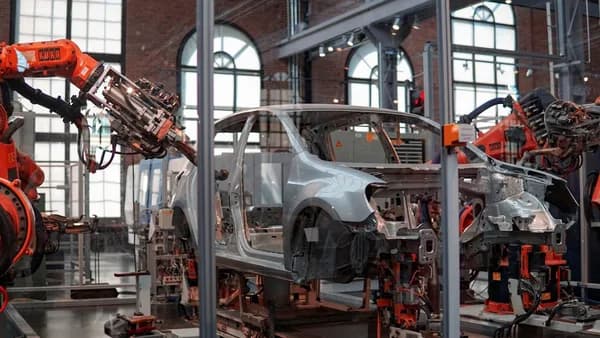
While Bostrom’s “Big Retirement” is still a vision, not a reality, there are hints of its potential in current AI deployments. Automation is already reshaping logistics, manufacturing, and even aspects of healthcare—AI models can diagnose diseases and optimize supply chains with minimal human input. These are the first steps toward the kind of problem-solving Bostrom imagines, though on a far smaller and less transformative scale.
But the gap between today’s narrow AI and Bostrom’s “solved world” is vast. Present systems are specialized, brittle, and heavily dependent on human oversight. No AI today can tackle the full spectrum of human challenges, let alone make work optional for all. Society is only beginning to grapple with the policy and cultural shifts such a future would demand.
What’s missing—and what remains to be seen—is whether advanced AI will be developed with Bostrom’s vision in mind, or whether economic and political pressures will steer it in other directions. The timeline is unknowable from the source, and the feasibility remains unproven. But these early experiments in automation and AI-driven problem-solving are the visible trailheads on the path Bostrom sketches.
What We Know, What Matters, and What to Watch
Bostrom’s “Big Retirement” is provocative: it’s not just about smarter machines, but about ending the need for work itself. The vision hinges on the development of advanced AI capable of solving core human problems—and on society’s willingness to let go of traditional labor as a source of value and purpose. The potential upside is a world where survival and toil are no longer central, but the risks—loss of control, inequality, and existential malaise—are enormous.
What remains unclear is how, or whether, society will navigate the ethical, political, and economic challenges of such a transition. The technical hurdles are only part of the story; questions of meaning, agency, and fairness are just as pressing.
The takeaway for the informed reader: watch the frontier of AI not just for new capabilities, but for signs of a deeper shift in what humanity expects from itself. If Bostrom’s vision gains traction, the biggest debates won’t be about AI safety or job loss—they’ll be about what to do with a future where work is no longer the answer.
Why It Matters
- Bostrom’s plan challenges the foundational link between work and survival, prompting a rethink of economic and social structures.
- A ‘Big Retirement’ powered by advanced AI could potentially eliminate poverty, disease, and scarcity, reshaping human purpose.
- The vision raises profound ethical and existential questions about what humanity does once AI solves its biggest challenges.