Introduction: The Rise of AI-Generated Art in Media
When The New Yorker published its recent profile of OpenAI CEO Sam Altman, the conversation quickly shifted from the man himself to the magazine’s striking choice of illustration. The image, credited to mixed-media artist David Szauder and labeled “Generated using A.I.,” depicted Altman in a blue sweater, surrounded by a cluster of eerie, disembodied faces—some angry, some mournful, some barely resembling Altman at all. The composition, unsettling and surreal, was as much a jump scare as a portrait. It also became a flashpoint in the ongoing debate about the role of AI-generated art in journalism and editorial content [Source: Source].
Szauder, who has a long history with collage, video, and generative art, represents a growing cohort of artists who blend traditional techniques with artificial intelligence. Yet, the New Yorker’s experiment raises pressing questions: Should AI-generated art have a place in serious journalism? And what does it cost us, artistically and ethically, when media outlets embrace this technology?
The Allure and Limitations of AI Art in Editorial Contexts
It’s not hard to see why editorial teams are drawn to AI-generated imagery. In an industry where speed, novelty, and budget constraints often drive decisions, AI art offers an irresistible package. With a few prompts and clicks, editors can conjure up illustrations that are visually arresting, customizable, and above all, quick to produce. As generative AI tools become more sophisticated, the temptation to rely on them grows stronger.
But the Altman illustration for The New Yorker is a perfect example of both the allure and the limitations of this approach. On one hand, the image is undeniably attention-grabbing—a visual metaphor for the complex, multifaceted nature of Altman’s public persona and the shifting landscape of artificial intelligence. On the other, it feels profoundly uncanny. The cluster of “alt-Altmans” hovering around the CEO’s head evoke not just the multiplicity of AI, but also a sense of unease, even dread. Many viewers found the illustration disturbing, and not in a way that necessarily deepens the article’s narrative [Source: Source].
This is the paradox of AI-generated art in journalism: while it can efficiently deliver novelty and provoke conversation, it often lacks the emotional intelligence and contextual nuance that human illustrators bring to their work. The “uncanny valley” effect is real—AI images frequently hover between the familiar and the alien, grabbing our attention but failing to provide the warmth, wit, or subtlety that traditional editorial illustrations can evoke. The risk is that, in the pursuit of efficiency and viral engagement, media outlets sacrifice both the aesthetic depth and the emotional resonance that readers value.
Why Traditional Artistic Craft Still Matters
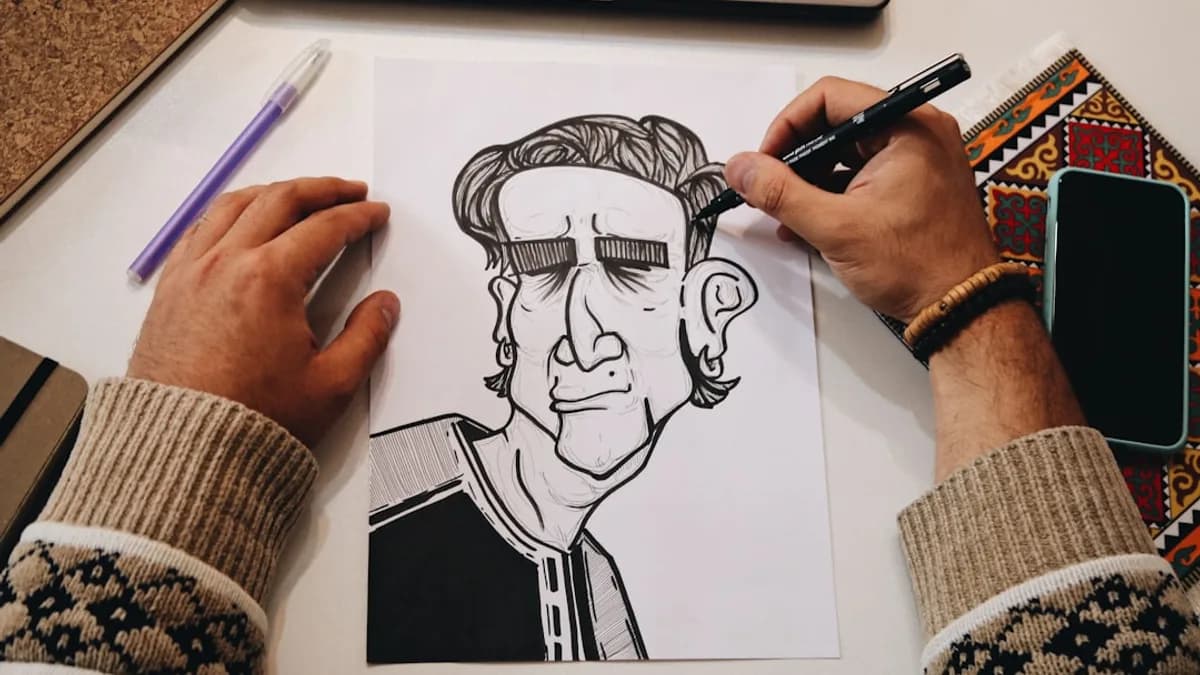
There is a reason why, for centuries, editorial illustrations have been entrusted to human artists. Art is not just about technical execution; it is about creativity, intuition, and storytelling. An illustrator interprets a brief, reads between the lines, and brings their own unique perspective to a subject. This process of translation—of turning words into images imbued with mood, symbolism, and intention—is what gives editorial art its enduring power.
David Szauder’s approach, blending AI with collage and video, actually reinforces this point. Szauder is not using AI as a replacement for his own creativity, but as a tool—a new instrument in a familiar toolkit. His generative processes predate today’s commercial AI platforms, rooted in years of experimentation and human decision-making. When he incorporates AI into his workflow, it is with a clear sense of authorship and critical intent, not simply for novelty’s sake [Source: Source].
In contrast, purely AI-generated art—created without meaningful human intervention—often misses the mark. It may produce striking images, but these works are shaped more by algorithmic pattern-matching than by lived experience or editorial insight. They lack the nuanced context, subtext, and intentionality that come from an artist deeply engaging with the subject matter and the story. This is especially significant in journalism, where illustrations are not just decorative but interpretive: they guide the reader’s understanding and emotional response.
Ultimately, what sets human-made art apart is its capacity for thoughtful storytelling. An illustrator working in dialogue with an editor can challenge assumptions, highlight contradictions, and introduce layers of meaning that an AI prompt cannot anticipate. This collaboration is at the heart of great editorial art—and it is something that cannot be outsourced to a machine.
The Ethical and Professional Implications for Illustrators
The rise of AI-generated art poses clear risks for professional illustrators. Many fear that widespread adoption of these tools could threaten their livelihoods, as media outlets opt for cheaper, faster alternatives over commissioning human artists. This anxiety is not unfounded: as generative AI becomes more capable and accessible, the economic pressure to “cut out the middleman” will only intensify.
Transparency is essential. When AI tools are used to generate illustrations, audiences deserve to know. The New Yorker’s disclosure—“Generated using A.I.”—is a step in the right direction, but it also raises further questions. What does it mean for attribution, creative ownership, or artistic credit when the “hand” of the artist is mediated by code? And how can editors ensure that the use of AI does not erode the value of artistic labor?
The creative industries must grapple with these challenges. There is a path forward that honors both innovation and integrity: using AI as a complement to, not a substitute for, human creativity. This means involving illustrators in the process, supporting hybrid approaches, and being upfront about the methods behind each image. It also means advocating for fair compensation and ongoing education, so that artists can adapt to new tools without being left behind. The industry’s long-term health depends on balancing technological change with respect for the people who make visual storytelling possible.
Conclusion: Embracing AI as a Complement, Not a Crutch
AI has a place in the future of editorial art—but it should be as a partner, not a replacement. The best results emerge from thoughtful collaboration, where human artists use new tools to expand their creative range while retaining control over the message and meaning. Media outlets have a responsibility to prioritize artistry and intentionality over convenience, ensuring that images serve the story, not just the algorithm.
As the debate continues, one thing is clear: the value of human creativity has never been higher. By fostering open dialogue, transparent practices, and genuine partnerships between artists and AI, the industry can chart a path that honors both innovation and craft. Editorial art doesn’t need to be generated by AI to be relevant—but when it is, it should always be in service of the story, not at the expense of the artist [Source: Source].